


News
Players
Tournaments

News
Players
Tournaments


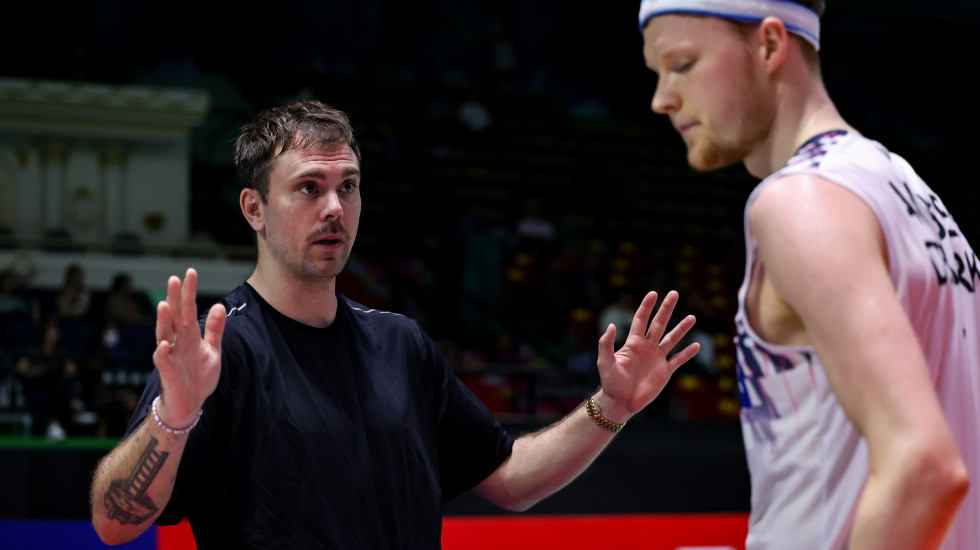
‘Anders is On Another Level Than I Was’
Jan O Jorgensen’s last international match was against Anders Antonsen at the Denmark Open 2020.
Now, interestingly, the former world No.2 finds himself in Antonsen’s corner, assisting the current No.3 navigate the challenges of a different era of men’s singles.
Jorgensen, among the steadiest players of his time and a former World Championships bronze medallist, completed a course in sports psychology after his retirement, and that meant he’s able to offer more than just inputs on technical or tactical aspects of the game. While Kasper Antonsen continues to be Anders’ main coach, Jorgensen is on board for training during particular weeks through the year – in Dubai, Hong Kong, France and now in Hangzhou.
It has been a year since he became part of Antonsen’s team and the results have been striking.
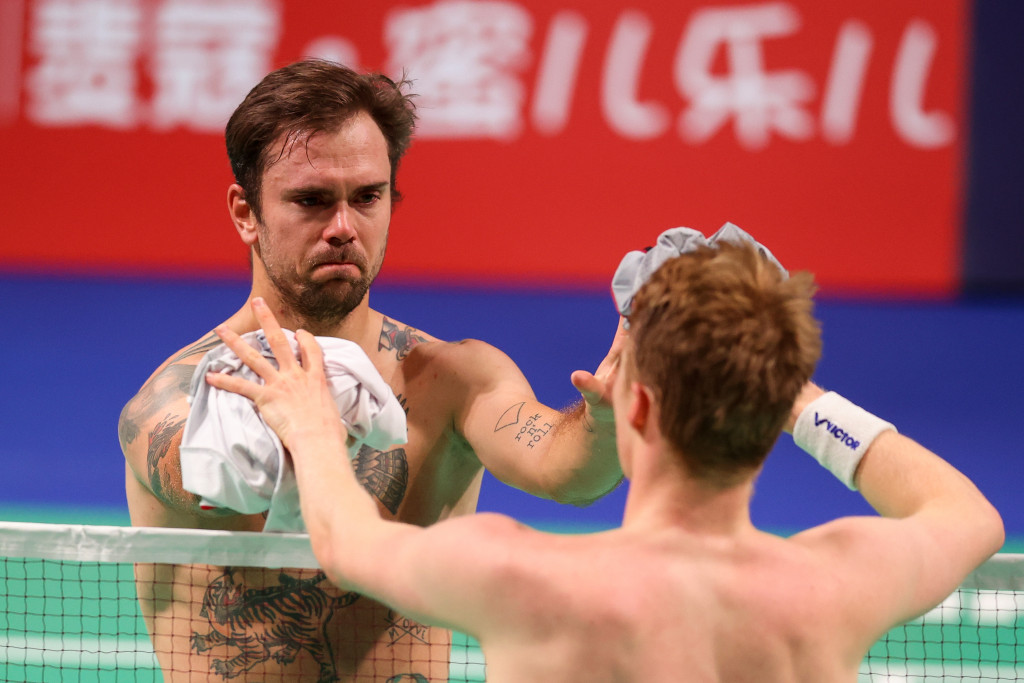
“Anders has his views on where he wants to go, so it’s basically a lot of support,” Jorgensen says, after on-court preparation on the eve of the HSBC BWF World Tour Finals 2025. “Where we have some very good stuff going is, on the tactical side, we have really good discussions about where we want to take the game and how we approach different opponents. That’s where we were really good at the French Open (Antonsen won the final in straight games). We had an upper hand more or less every game, on the tactical aspect. So that was very nice. That doesn’t happen all the time, you know!”
It wasn’t that long ago that Jorgensen competed – but the Dane insists that men’s singles has evolved to a far higher level than in his time.
“You can’t compare it at all. The level is way higher now, way higher, in my opinion. There’s so much more… the game is more like a chess game all the time now. Back when I was good, you had a defensive player, you had an attacking player. The level is way better than five-six years ago when I played.
“In 2010-2015, four players could win the tournament. Once in a while, somebody else won, but you had those four. But here, it’s harder from the first round. You have be all-round… you can’t just come in with a mindset of being aggressive. You have to be able to absorb, and be different, play defense, and you also need to be able to score points. It’s really tough if you’re a one-sided player.”
The challenge then is to ensure his player adds to his arsenal in every department, and to continue to evolve against opponents who are constantly nipping at his heels.
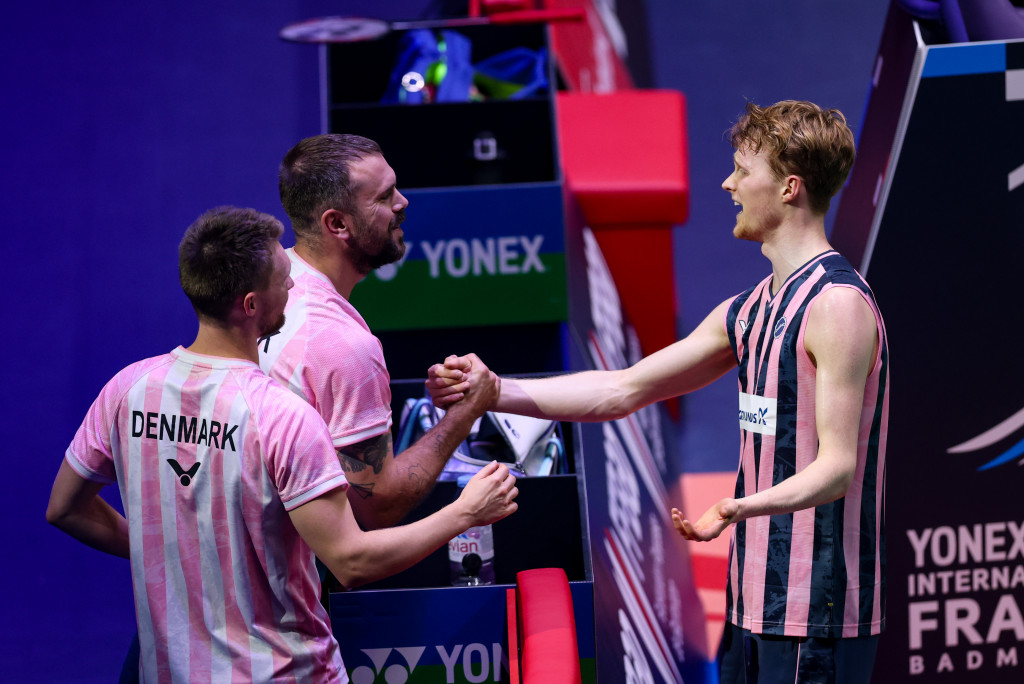
“I only take it from Anders’ perspective,” Jorgensen says. “We see where he is, his stronger points, and we try to direct it and get the game in that direction. I think Anders is very strong physically and tactically, very good. Anders is also working closely with his physical and conditioning coach, Thomas, he’s super good. He’s been a key to Anders’ success, so he’s very, very important.”
How much of his own game does Jorgensen see in Antonsen, considering the younger Dane grew up watching him and others of his generation?
Jorgensen is disarmingly honest, for someone who was among the best players of his era.
“Not really, no. I think Anders is on another level than I was; his tactical awareness and his physical condition – everything.
“It’s been very nice to come back and see how the game changed. It’s a more complex game than it was before. Of course, it’s nice to be romantic and look back and say, ‘Oh, we had a really high level’ but in my opinion, it’s changed a lot.”

BWF World Tour News
Macau Open: Jiang, Wei Resume Partnership
15 June 2026
Australian Open: Feng/Huang Rediscover Winning Touch
14 June 2026
Australian Open: Relentless Yamaguchi in Fourth Straight Final
13 June 2026
Australian Open: Dong Extends Fairytale Run
12 June 2026
Where To Watch: SATHIO GROUP Australian Badminton Open 2026
11 June 2026
Smashing Stats: Australian Open 2026
10 June 2026
Australian Open: Yamaguchi Heads Field on Long-Awaited Return
8 June 2026
Indonesia Open: Fourth Week, Third Title
8 June 2026